

Child Welfare Services and the Disproportionate Representation of Indigenous Families
- Nov 20, 2023
- 7 min read
Updated: Dec 3, 2023
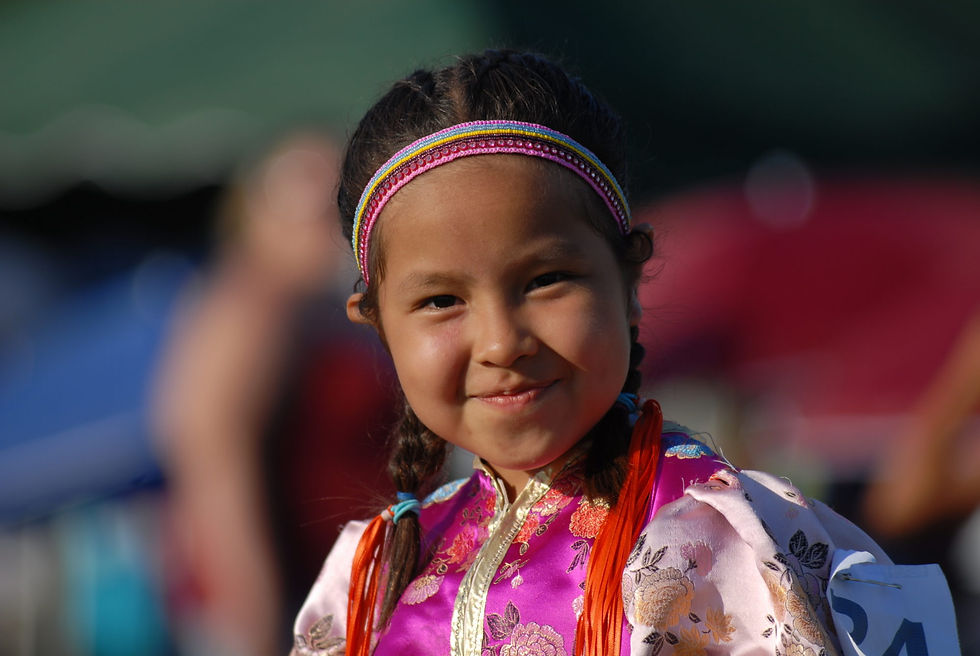
Indigenous Canadians make up 5% of the Canadian population but represent between 80-96% of families receiving child intervention services. Factors such as colonial rule, low average age demographic, low socioeconomic status, and social isolation contribute to the disproportionate number of Indigenous children and youth in care (DHSS, 2022). This joint blog with fellow #MHST601 student, Georgina Burt-Severo (@burt_sever53347) explores the historical contexts which influence modern-day Indigenous People in Alberta and Yukon, compares the family and child welfare systems’ approaches, and reflects on the changes that are being implemented to improve the physical and psychological wellness and social outcomes for Indigenous People.
Indigenous Population Representation
The 2021 Canadian Census reported that 1,807,250 people in Canada identify as Indigenous (Indigenous People, 2021). Alberta has the fourth largest number of Indigenous residents in Canada at 6.9% (284,470 people), behind Manitoba (18.1%), Saskatchewan (17.0%) and Newfoundland and Labrador (9.3%). Compared to other provinces, Alberta has the highest proportion of Métis residents (Indigenous People, 2021). Approximately 21%-25% of Yukon residents self-identify as Indigenous, which is well above the national average of 5% (DFYBS, 2021). Of the 23% Yukon Indigenous People, 17.5% are First Nations, 3.2% are Métis, and 0.7% are Inuit (Statistics Canada, 2017).
Age Distribution
Across Canada, Indigenous, First Nations, Métis, and Inuit residents are significantly younger than their non-Indigenous counterparts, within the 0-23 age range. Alberta First Nations and Inuit residents have the highest number of children aged 0-14 years within their population (Indigenous People, 2021). For example, in 2021, 44.5% of Alberta’s Indigenous population was under the age of 25.

Fig. 1 Age structure of population in Alberta, 2016 & 2022. Retrieved from Indigenous People, 2021
Similarly, Yukon First Nations have a lower average age of 34 (Statistics Canada, 2017). As indicated in Figure 2, Yukon First Nations people make up 23% of their population ranging between 0-14 (Statistics Canada, 2017). The young average age and high population representation of infants and children can influence the caregiving capabilities and opportunities; gaps in knowledge are often filled with child welfare services. In the Yukon, 96% of families using child welfare services self-identify as Indigenous (DHSS,2022).

Fig 2. Distribution of Indigenous Population by Age, 2023. Retrieved from Yukon Bureau of Statistics, 2023
Colonialism and its Impact on Modern Child Intervention
Indigenous People have inhabited the lands (now known as Canada) for centuries. The first recorded mass migration from Asia occurred 50,000 years ago. Indigenous People were initially able to live relatively uninterrupted lives, creating bonds with the land and building a strong cultural identity (The Indigenous Experience of European Schooling in Northern Alberta, n.d.). The influx of European migrants in the 1640s created significant shifts in the lives of Indigenous communities.
The emergence of the Metis people (produced from inter-relationships between Indigenous and French settlers) changed the ethnic profile of communities, and the acceleration of migration gave rise to a gap between the wealthy and poor, typically at the Indigenous Peoples’ expense. Health and social disparities emerged, along with segregated housing and the introduction of Eurocentric schooling models (History of Settlement in the Canadian Prairies, n.d.).
Residential School System
Boarding schools were introduced to Canada in the early 1860s. Indigenous families were encouraged to board their children on a voluntary basis. Within half a century, boarding schools evolved into a more oppressive residential school model where children were forced from their homes, often without parental consent, to endure purposeful assimilation through Christian teachings. Typically, residential schools were staffed and funded by various religious groups (Yukon Government, 2023). Along with physical, psychological and sexual abuse, many children were seriously injured or lost their lives within the system (History of Settlement in the Canadian Prairies, n.d.).

Although the government started the process of phasing out residential schools in the 1950s and 60s, several remained operational as boarding schools for children whose families were deemed unable to care for them, often unfairly. Concurrently, the 1960s saw a surge of widespread apprehensions and transfers of Indigenous children into Euro-Canadian homes and child protection institutions by aggressive child welfare systems. The phenomenon, often called the Sixties Scoop, remained prominent until the 1980s and resulted in lasting intergenerational impacts such as knowledge and cultural gaps, reliance on government services and intergenerational trauma (Sixties Scoop, n.d.).
Navia et al., (2018) reported that child welfare workers are more likely to investigate Indigenous families in comparison to non-Indigenous families and apprehended young people are more likely to be placed into restrictive placements for longer periods when compared to their non-Indigenous peers. This eerily mimics the residential school system and Sixties Scoop practices of the past (Navia et al., 2018).
Canada’s Modern Child Intervention System
Colonization and the legacy of the residential school system continue to impact the delivery of child intervention services in Canada. As of 2022, an estimated 9,451 children and youth in Alberta received child intervention services. 7,825 young people were apprehended from their homes, while 1,626 received in-home support (Child Intervention Statistics | Alberta.Ca, n.d.). The Yukon numbers are lower per individual, with up to 146 children in out-of-home care and 269 families using Family and Child Services, with 80-90% identifying as First Nations (DHSS, 2022).
Child Intervention Services and Resources
The Government of Alberta works continuously to improve the quality of Child Intervention Services that are provided under the Child, Youth and Family Enhancement Act (CYFEA). The Ministry of Children and Family Services provides a policy and legislative framework for 5 regions (Calgary, Central, Edmonton, Northeast, Northwest, North Central, Southeast and Southwest regions) and supports support 19 Delegated First Nations Agencies (DFNAs) that deliver child protective services for First Nation children who reside within their boundaries. Click here for further information about DFNAs.
The province has adopted a Collaborative Service Delivery model in which numerous organizations provide complementary services ranging from foster and kinship care agencies, early intervention programs, housing and support supports for children transitioning out of the child intervention system. A list of partner agencies can be found here.
Much like Alberta, several levels of governmental organizations and community-based foundations are in place in Yukon to support families at risk or using child welfare programs. Under the Child and Family Services Act (CFSA), Yukon’s Family and Children’s Services (FCS) provides a continuum of services such as Agreements for Support Services for Families and voluntary preventative services responsible for out-of-home placements. The Yukon government, FCS and child welfare system work closely with First Nations representatives to provide preventative strategies to families (DHSS, 2022). Of note, FCS is actively working on ensuring Indigenous out-of-home placements to support its goal of maintaining child and youth relationships with families, friends, community, land, and cultural traditions, further demonstrating how the Yukon is a leader in reconciliation and Indigenous autonomy practices (DHSS, 2022).
Treaties – agreements between the federal government and Indigenous groups
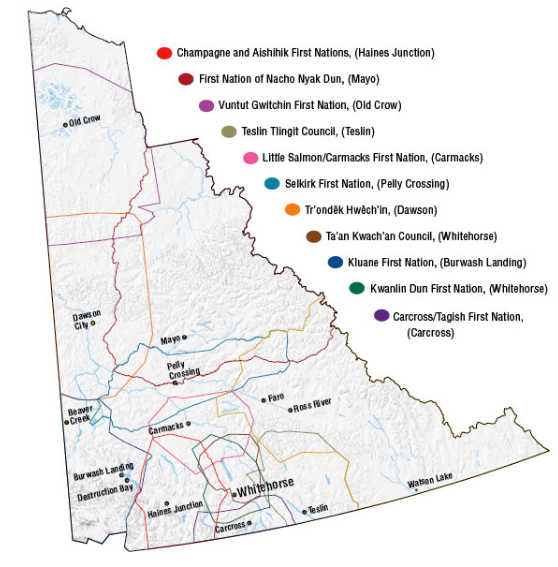
Treaties grant Indigenous groups the autonomy to make laws and decisions regarding resource management, economic and social programming, land management, self-governance, tourism, and traditional practices (YLTL; Yukon Government, 2023). The Yukon is a leader in Indigenous Reconciliation efforts when compared to other provinces and territories (YFNSG). 11 of the Yukon’s 14 First Nations groups have signed modern treaties (Yukon Government, 2023). In contrast, 3 of a possible 11 treaties have been signed in Alberta (Smith, 2017).

Bill C-92 – affirming the right of jurisdiction over child and family services
In 2020, Bill C-92, a federal Act respecting First Nations, Inuit and Métis children, youth and families, was introduced to shift power to Indigenous communities to develop their own child and family services. This movement towards self-governance is anticipated to improve outcomes for young people by de-colonizing the current system by providing a more culturally appropriate and traditional practice model. As of April 2023, three nations in Alberta have signed agreements with the federal government under the Act. Yukon has not signed an agreement as yet.
Federal Assistance for Families and Children in Care
On January 4, 2022, Canada announced it had reached an Agreement-in-Principle with the Assembly of First Nations, the First Nations Child and Family Caring Society, the Chiefs of Ontario and the Nishnawbe Aski Nation on long-term First Nations Child and Family Services (GoC, 2023). It is anticipated the agreements will lead to Increased federal funding and support for children who no longer meet territorial funding and for youth who have reached age of majority (GoC, 2023)
Conclusion
Historical colonialist agendas, residential school systems and persistent racism continue to impact Indigenous People at a disproportionate rate, as reflected in both Alberta and the Yukon. This has led to a poorer socioeconomic status and an inability to provide safe living conditions for children and youth. To address this disparity, provincial and federal governments are actively working with Indigenous People to develop preventative strategies to reduce the need for child welfare services, to provide culturally appropriate, community-based out-of-home placements, and to shift decision-making powers to Indigenous groups. It is hoped that Yukon and Alberta’s ongoing efforts at the provincial level, in conjunction with strategies at the federal level, will begin to improve health and social outcomes for Indigenous families in the coming years.
References
Indigenous Services of Canada (2022, March 18). Indigenous peoples in Alberta [Administrative page; geospatial material]. Government of Canada. Retrieved from https://www.sac-isc.gc.ca/eng/1647614714525/1647614742912
Delegated First Nation Agencies | Alberta.ca. (n.d.). Retrieved November 17, 2023, from https://www.alberta.ca/delegated-first-nation-agencies
Department of Finance Yukon Bureau of Statistics, DFYBS (2021). Indigenous Peoples, 2021 Census. Yukon Government. Retrieved from TOPIC: (yukon.ca)
Department of Health and Social Services, DHSS (2022). Family and Children’s Services Annual Report 2020-2022. Yukon Government. Retrieved from https://yukon.ca/sites/yukon.ca/files/hss/cfsa_annual_report_2020-2022.pdf
Dreaddy, K. (2019). Indigenous Obstetric Evacuation: Harmful but Risky to Resist. Impact Ethics. https://impactethics.ca/2019/12/19/indigenous-obstetric-evacuation-harmful-but-risky-to-resist/
Founding First Nations sign agreement with Canada, Alberta to run own child and family services | Globalnews.ca. (n.d.). Global News. Retrieved November 18, 2023, from https://globalnews.ca/news/9615224/founding-first-nations-agreement-canada-alberta-child-family-services/
History of Settlement in the Canadian Prairies. (n.d.). Retrieved November 18, 2023, from https://www.thecanadianencyclopedia.ca/en/article/prairie-west
Indigenous People. (n.d.). 2021 Census of Canada. Alberta.Ca. Retrieved November 19, 2023, from https://open.alberta.ca/dataset/487a7294-06ac-481e-80b7-5566692a6b11/resource/257af6d4-902c-4761-8fee-3971a4480678/download/tbf-
Map of First Nations Reserves and Metis Settlements | Alberta.ca. (n.d.). Retrieved November 17, 2023, from https://www.alberta.ca/map-of-first-nations-reserves-and-metis-settlements
Navia, Daniela, et al. “Uncovering Colonial Legacies: Voices of Indigenous Youth on Child Welfare (Dis)Placements.” Anthropology & Education Quarterly, vol. 49, no. 2, June 2018, pp. 146–64, https://doi.org/10.1111/aeq.12245
Ross, C. (2019). THE INDIGENOUS EXPERIENCE OF EUROPEAN SCHOOLING IN NORTHERN ALBERTA. Alberta History, 67(3), 2+. https://0-link-gale-com.aupac.lib.athabascau.ca/apps/doc/A596318774/EAIM?u=atha49011&sid=bookmark-EAIM&xid=444d37fc
Smith, L. T. (n.d.). Ten things to know about Indigenous people and resource extraction in Alberta. Parkland Institute. Retrieved November 19, 2023, from https://www.parklandinstitute.ca/ten_things_to_know_about_indigenous_people_and_resource_extraction_in_alberta
Sixties Scoop. (n.d.). Retrieved November 18, 2023, from https://indigenousfoundations.arts.ubc.ca/sixties_scoop/
Statistics Canada. 2017. Focus on Geography Series, 2016 Census. Statistics Canada Catalogue no. 98-404-X2016001. Ottawa, Ontario. Data products, 2016 Census. Retrieved from Focus on Geography Series, 2016 Census (statcan.gc.ca)
Yukon Archives (2021). Colonialism, Archive and Yukon First Nations: A Guide to Public Records in Yukon Archives Documenting the History of Colonization in Yukon. Retrieved from Colonialism, Archives and Yukon First Nations: A Guide to Public Records in Yukon Archives Documenting
Yukon Bureau of Statistics for Child Care Services Unit, YBSCCS (2006). Yukon Child Care Survey: Report on the Results of the Yukon Licensed Child Care Services User Questionnaire.. Yukon Government. Retrieved from https://yukon.ca/sites/yukon.ca/files/ybs/fin-yukon-child-care-survey-long-version-2006.pdf
Yukon Bureau of Statistics, YBS (2023). Population Report, Second Quarter, 2023. Statistics and Data. Retrieved from https://yukon.ca/sites/yukon.ca/files/ybs/fin-population-report-q2-2023.pdf
Yukon First Nation Self-Government, YFNSG (n.d.). Mapping the Way: Our Journey to Land Claims and Self-Government. Retrieved from Mappingtheway.ca | Yukon First Nation Self-Government
Yukon Government (2023). Find Out About Yukon First Nations. Retrieved from https://yukon.ca/en/your-government/about-yukon/find-out-about-yukon-first-nations
Yukon Larger Than Life, YLTL (n.d.). The Yukon First Nations. Retrieved from Larger Than Life | Travel Yukon


Comments